
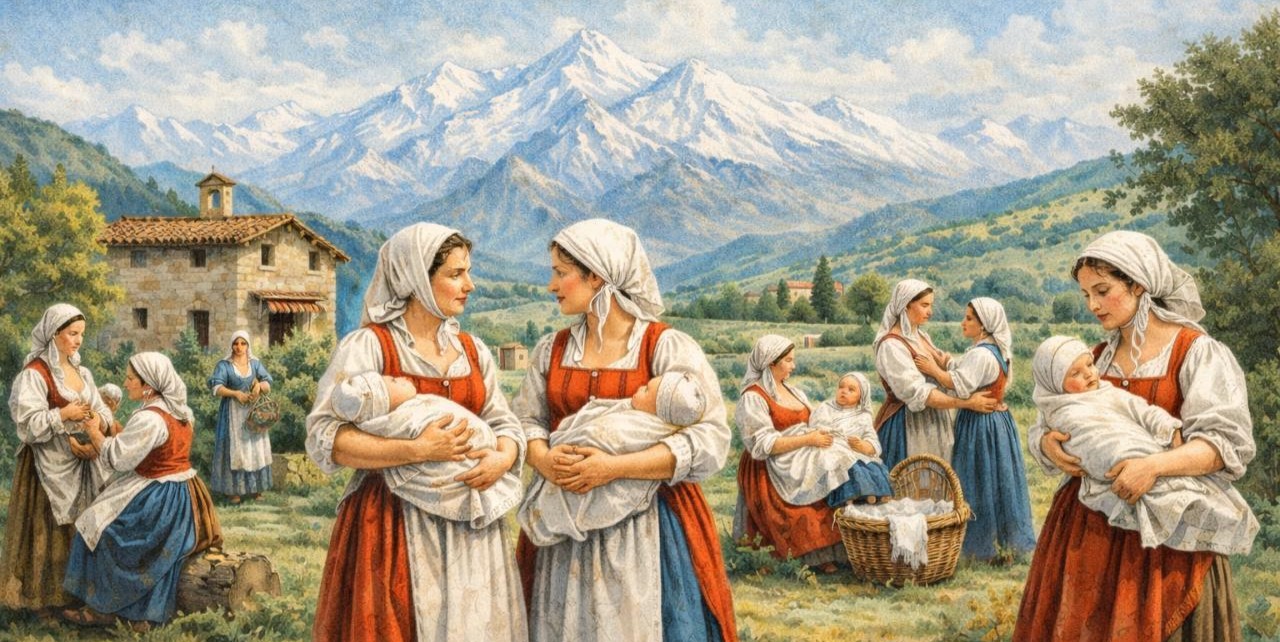
After a relatively prosperous time, the territory faced a recession. People started to move not only to different parts of the region but also to foreign countries in search of better job opportunities. Women were also at the center of this process, they became known all over the Veneto region as some of the best nannies, called balie.
During the 17th and 18th century, migration became a defining social and economic phenomenon in the province of Belluno, especially because of its geographical collocation in the region of Veneto. The mountainous landscape and the scarcity of fertile land made agriculture difficult and often insufficient to sustain local families. As a result, many people left their villages and towns in search of better opportunities.
In the 1700s, the phenomenon of migration was mostly seasonal. Both men and women travelled for several months each year to work, and later returned home during the winter, bringing money to help support their families. Men worked as construction workers, woodcutters, peddlers, or artisans in nearby regions such as Austria and Germany and young women started to apply for nannies jobs in the rest of Veneto.

During the 1800s, migration became more permanent and widespread. Economic crises, population growth, and political changes pushed many Bellunese people to emigrate not only within Europe but also overseas. Some moved to Brazil, Argentina, and the United States.
These migration flows deeply influenced the culture, economy, and identity of the Belluno area, creating strong connections between local communities and distant parts of the world. Today, this history remains an important part of the region’s collective memory and many associations keep in touch with the descendants abroad of these people.




0 commenti